Shellac Grades Explained — Which Grade for Which Job
Seedlac, button lac, TN, Lemon, Platina, Garnet, bleached, E904: the shellac trade uses a lot of names. Here is what each grade is, how they differ, and how to choose and specify the right one.
Shellac grade names can be confusing because they describe three different things: how far the lac has been refined, whether the wax has been removed, and what colour the resin is. Once you separate those three, every grade name falls into place.
1. Refining stage: from seedlac to flakes
All shellac starts as sticklac, the raw resin scraped from host-tree twigs. Crushing, sieving and washing give seedlac, the granular raw material. Melting and filtering seedlac gives finished shellac, which is formed either by hand into discs (button lac, called gala in South Asia) or by machine into thin sheets broken into flakes.
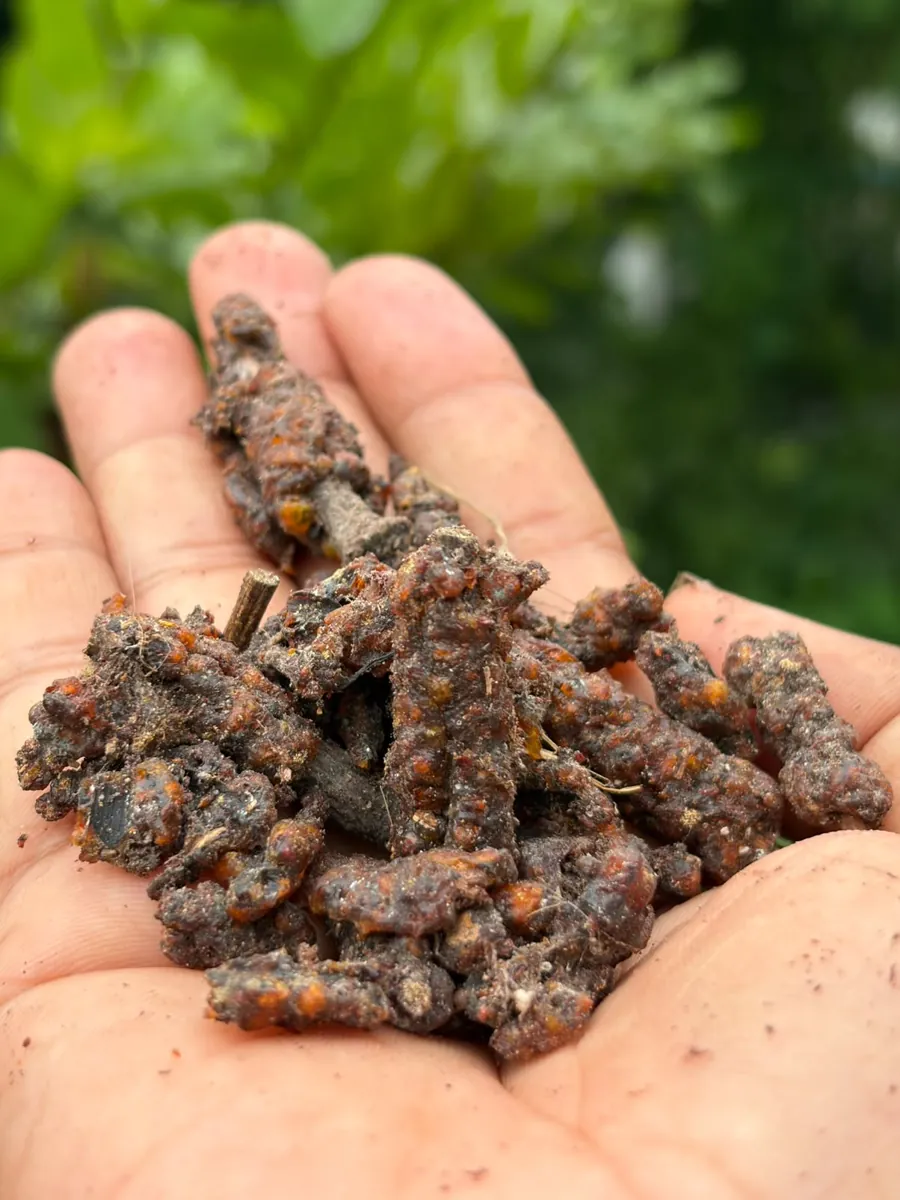
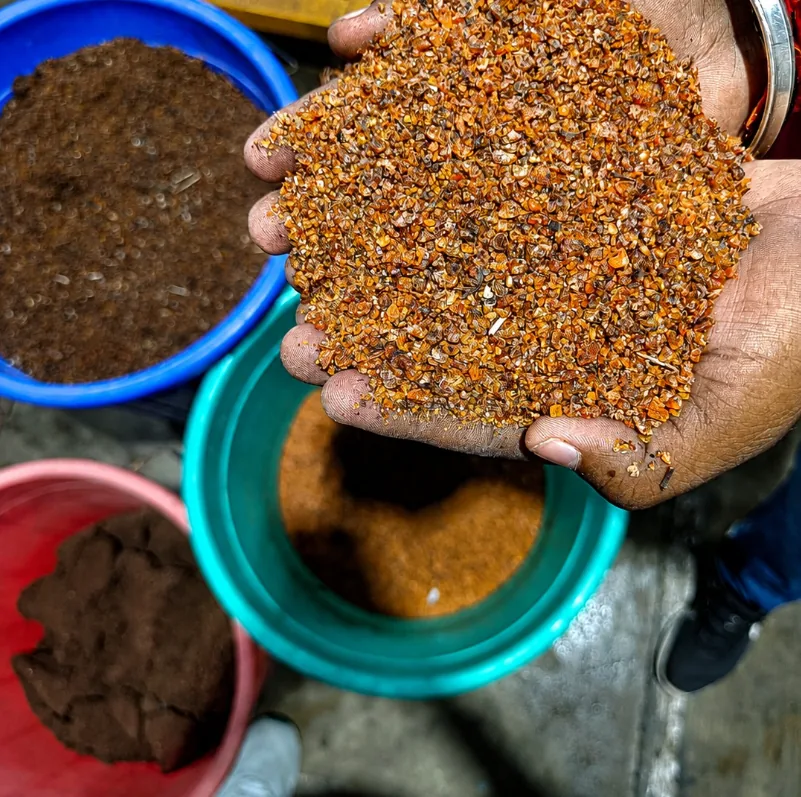
Seedlac also comes in crop grades. Kusmi seedlac, from lac grown on the kusum tree, is paler and costs more. Baisakhi, the main summer crop of the Rangeeni strain, is darker and cheaper. The crop sets the starting colour of every product made from it. The washing step also removes the water-soluble lac dye, which is recovered and sold as a natural red.
2. Wax: waxed, dewaxed and bleached
Lac naturally contains a few per cent of wax. Standard flakes, button lac and seedlac keep it. Waxed shellac gives a slightly cloudy solution and a softer film, which is fine for traditional French polish used on its own.
Dewaxed shellac has the wax removed to 0.2% or less. It dissolves to a clear solution, gives a harder and clearer film, and bonds better under other finishes. Bleaching is a separate step that removes colour. A shellac can be dewaxed, bleached or both. Wax-free bleached shellac is the grade used in food and pharmaceutical coating, and in the EU it is the only form that meets the E904 specification.
3. Colour grades
Within each type, shellac is sold by colour. From palest to darkest, the usual dewaxed grades are:
| Platina | Palest dewaxed grade. Light woods, art and gilding, clear varnishes. |
| Super Blonde | Very pale; often physically decolourised rather than chemically bleached. Pale finishes and varnishes. |
| Blonde | Light-to-mid tone for general wood polish. |
| Lemon | Warm golden tone; a popular French polish grade. |
| Orange | Amber tone for darker woods. |
| Garnet | Darkest, red-brown. Antique restoration and musical instruments. |
Waxed trade grades follow the same idea. TN is the standard, lowest-cost machine-made grade for general polish, sealing and coatings. Lemon No. 1 is a lighter machine-made or handmade grade for French polish and gilding.
All grades at a glance
| Seedlac (Kusmi, Baisakhi) | Waxed · raw material for processing, varnishes, adhesives |
| Button lac (gala) | Waxed · handmade · French polish, restoration, crafts |
| TN, Lemon No. 1, Orange flakes | Waxed · machine-made · polish, sealing, coatings, abrasives |
| Dewaxed Platina to Garnet | Wax ≤ 0.2% · clear finishes, varnishes, inks, cosmetics |
| Standard bleached | Waxed · near-white · light finishes, paper coatings |
| Dewaxed bleached (E904) | Wax ≤ 0.2% · near-white · food glazing, fruit and tablet coating |
Choosing by application
- Food glazing, fruit coating, tablets: wax-free bleached shellac only. See our food, fruit coating and pharmaceutical guides.
- Wood finishing: waxed flakes or button lac for traditional French polish; dewaxed grades when another finish goes on top. Pick the colour to suit the wood. See the wood polish guide.
- Inks and varnishes: dewaxed pale grades for clear varnishes; waxed grades are often fine in pigmented inks. See the printing ink guide.
- Cosmetics: pale dewaxed or bleached grades. See the cosmetics guide.
- Grinding wheels: waxed flakes or seedlac. See the abrasives guide.
- Further processing: seedlac, choosing Kusmi for pale end products.
How to specify a grade
A grade name alone is not a specification, because names differ between processors: one supplier's Platina can be darker than another's Super Blonde. When you buy, state:
- Colour as a number and a scale, for example Gardner 7–8 or Lovibond 2.0–2.5, measured on a 20% solution in ethanol.
- Wax content: about 3–5% for waxed grades, 0.2% or less for dewaxed.
- Acid value, alcohol-insoluble matter and moisture.
- Flow, which shows freshness: it falls as shellac ages.
- For pale grades, whether the resin is chemically bleached or physically decolourised, if your market cares.
Then check every lot against its certificate of analysis. Our COA, MSDS and TDS guide explains what each document should show.
How we supply
We supply the full range above, from Kusmi and Baisakhi seedlac to dewaxed colour grades and E904 food-grade shellac, in 25 kg packs with a batch COA from a NABL-accredited laboratory. Send your application, colour target and quantity when you request a quote, and ask for samples of two neighbouring grades to compare side by side.
Quick answers
Which shellac grade is the palest? Platina is the palest dewaxed colour grade, followed by Super Blonde. Dewaxed bleached shellac is paler still, close to white.
Which shellac grade is used for food? In the EU, only wax-free bleached shellac (wax ≤ 0.2%) meets the E904 specification. Colour grades, waxed flakes, button lac and seedlac are technical grades.
Is a colour name like Lemon or Blonde a specification? No. Grade names differ between processors. Specify colour with a number and a scale (Gardner or Lovibond), plus wax, acid value and flow, and compare against the COA.
Not Sure Which Grade You Need?
Tell us your application and colour target. We will suggest a grade and send samples to compare. Quotes within 24 hours.