Shellac Flakes Supplier from India — Orange, Blonde & Garnet
Shellac flakes in three colour grades for wood finishing, polishes, coatings and cosmetics. Natural wax about 3–5%, not dewaxed. For EU food use, see E904 food-grade shellac. MOQ 100 kg per grade, batch COA with every lot.
Price ₹1,100–1,700/kg by colour grade (≈ US$11.3–17.5/kg) ex-works India, before freight · USD at ₹97 = US$1 (Oct 2026), confirmed on quote

Shellac Flakes
Shellac flakes are produced by heat-processing seedlac, melting the resin and forming it into thin sheets that are then broken into flakes. The process removes most impurities while retaining the natural wax (3–5%) that gives shellac its distinctive film-forming properties.
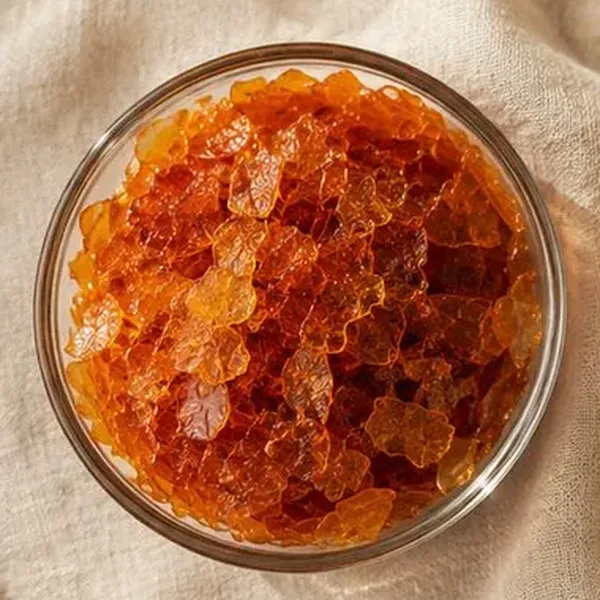
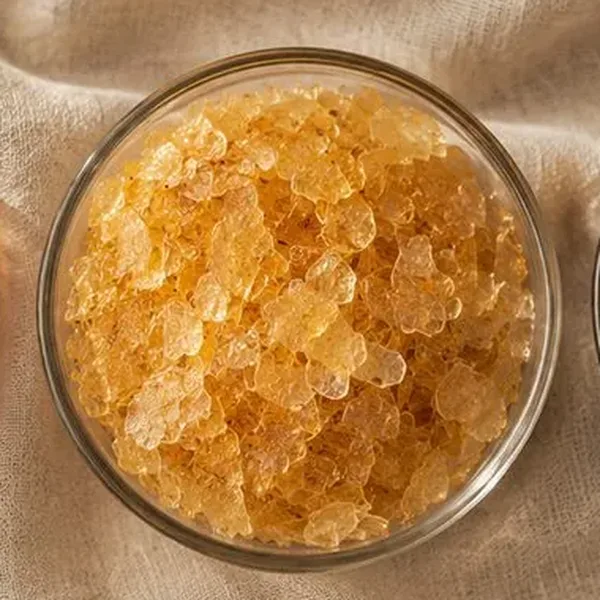
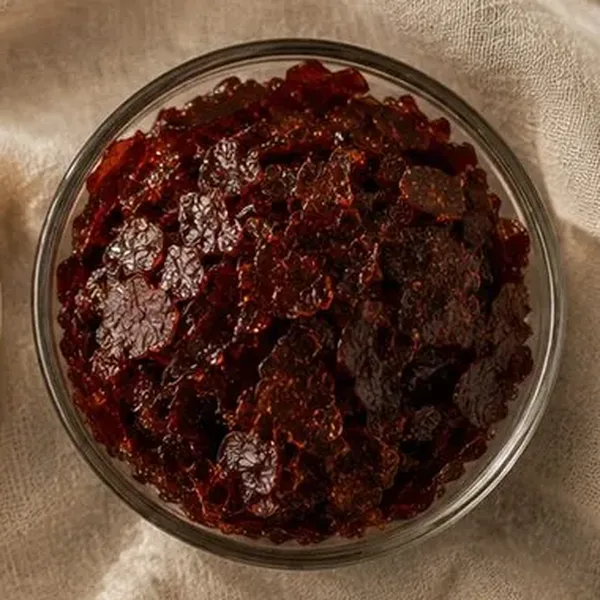
We supply three colour grades — orange, blonde and garnet — whose colour depends on the raw lac and the processing route; all three are unbleached. Because these grades retain their natural wax, they are not the EU food additive E904 — since Commission Regulation (EU) 2026/189, E904 covers only wax-free bleached shellac. For food glazing, specify E904 food-grade shellac; for wood finishing under a modern topcoat, choose dewaxed shellac if you need a clear film. A full COA is provided with every shipment. Shellac is also the raw material for aleuritic acid, a starting material for musk fragrances.
Available Grades
Technical Specifications
| Wax Content | 3–5% (standard shellac) |
| Bleach Number | Orange: 40–60 | Blonde: 65–80 | Garnet: <35 |
| Acid Value | 65–80 mg KOH/g |
| Alcohol Solubility | Greater than 95% |
| Moisture | Less than 2% |
| Heavy Metals | Less than 10 ppm |
| EU Food Status | Not E904 (retains natural wax) — for food use, see E904 food-grade shellac |
| Origin | Jharkhand lac belt, India |
| Standard Packing | 25 kg multilayer bags |
| Minimum Order | 100 kg per grade |
| Lead Time | 5–7 working days |
| Shelf Life | 24 months in cool, dry storage |
| Incoterms | FOB Kolkata / CFR / CIF |
| HS code (India) | 1301 90 99 (lac and shellac; HS 1301.90 internationally) |
Shellac Flakes for Wood Finish, French Polish and Coatings
French Polish
Traditional padded French polish on furniture and instruments, where the waxed film is used on its own. Under a modern topcoat, use dewaxed shellac if you need a clear film.
Coatings & Sealers
Spirit varnishes, knotting and primer coats, and protective coatings on wood, paper and metal.
Wood Finishing
French polish, furniture lacquer, parquet floor finish and musical instrument finishing — especially violins and guitars.
Electrical Insulation
Insulation varnish for transformers, coils and capacitors. Excellent dielectric and thermal resistance.
Cosmetics
Hair spray fixative, nail polish, mascara base and lipstick film former — natural alternative to synthetics.
Food Use
These waxed grades are technical, not food grade. For confectionery or fruit glazing, specify E904 food-grade shellac.
Machine-Made & Handmade Grades
Besides the three colour grades above, we supply the standard Indian trade grades of waxed shellac. These keep their natural wax and are the usual choice for French polish, gilding, sealing and other technical uses where a lower price matters more than a fully clear film.
| Grade | Process | Wax | Specification | Typical use |
|---|---|---|---|---|
| TN Shellac | Machine made | Natural wax retained | Stated on batch COA | General-purpose polish, sealing and coatings at the lowest cost |
| Lemon No. 1 | Machine made | Natural wax retained | Stated on batch COA | Lighter French polish, gilding, art and craft supply |
| Orange | Machine made | Natural wax retained | Stated on batch COA | Amber wood finishes, polishes, technical coatings |
| Lemon No. 1 handmade | Handmade (traditional) | Natural wax retained | Stated on batch COA | Traditional French polishing and restoration |
Full specification (colour, wax, acid value, flow and insolubles) is sent with the quotation, and every lot ships with a batch COA from a NABL-accredited laboratory. These are technical grades, not food grades. For wax-free grades, see dewaxed shellac.
Request a Grade Sample →Samples, Shipping & Documents for Shellac Flakes
| Samples | 100–500 g on request. The courier charge is deducted from your first bulk invoice. |
|---|---|
| Quotation | Price ₹1,100 – ₹1,700 per kg depending on grade. Freight and insurance are added by Incoterm (FOB Kolkata, CFR or CIF) — tell us grade, quantity and destination port and we confirm within 24 hours. |
| By sea | FOB Kolkata, CFR or CIF to your port. |
| Bangladesh | By road via the Petrapole–Benapole border on FCA or DAP terms. See our Bangladesh buyer guide. |
| Vietnam | Certificate of origin Form AI under the ASEAN–India FTA, for reduced import duty. See our Vietnam buyer guide. |
| Documents | COA from a NABL-accredited laboratory, MSDS, technical data sheet, commercial invoice, packing list, certificate of origin; phytosanitary certificate where the destination requires it. |
| Payment | T/T (50% advance for new buyers) or LC at sight. |
| Packing & MOQ | See the specification table above; private-label packing on request. |
Buyer Guides
- Bleached vs Unbleached Shellac: Which One to Buy
- Shellac vs Synthetic Coatings: Polyurethane, Lacquer and More
- Shellac & Lac for Heritage Restoration
- Shellac for Musical Instrument Finishing
- Exporting to the United Kingdom
- Button Lac vs Shellac Flakes for French Polish
- Shellac Grades Explained: Which Grade for Which Job
- Seedlac vs Shellac Flakes vs Dewaxed Shellac: Which Should You Buy?
- What Is E904 Shellac? A Buyer's Guide to Food-Grade Compliance
- Why Shellac Blocks in Storage — and How to Prevent It
- Dewaxed vs Waxed Shellac for Wood Finishing
- Shellac for Wood Polish & Furniture — industry guide
- Shellac for Printing Ink — industry guide
- Shellac for Abrasives — industry guide
- Market guides: Italy · Spain · France · Germany · USA · Indonesia
Or WhatsApp us about Shellac Flakes →
Shellac Flakes — Common Questions
What is the difference between orange, blonde and garnet shellac flakes?
They differ in colour. Orange is the standard amber grade and the most widely used. Blonde is lighter and gives a clearer film. Garnet is a dark red-brown, used for antique furniture and musical instruments.
Can these shellac flakes be used in food?
Not in the EU. These flakes keep their natural wax, and since Regulation (EU) 2026/189 only wax-free bleached shellac meets the E904 specification. For food, see E904 food-grade shellac.
Should I use waxed or dewaxed shellac for wood finishing?
Waxed flakes are fine for traditional French polish used on its own. If another finish will go on top, use dewaxed shellac, because the natural wax can weaken the bond of some topcoats. More in our waxed vs dewaxed guide.
How long do shellac flakes keep?
About 24 months in cool, dry, sealed storage. Heat makes flakes stick together and dissolve more slowly, so store them below 25 °C and use them in date order.
How do I dissolve shellac flakes, and what is a 2 lb cut?
Dissolve the flakes in denatured alcohol or ethanol, stir now and then, leave overnight and strain. A 2 lb cut means 2 lb of flakes per US gallon of alcohol, about 240 g per litre.
What is the difference between machine-made and handmade shellac?
Machine-made flakes are thin and uniform, with consistent colour and fast dissolving. Handmade shellac is drawn by the traditional bhatta method and is thicker and more variable; button lac is its disc form.
What is lemon shellac?
Lemon is a pale, lemon-yellow colour grade of shellac flakes, lighter than orange. Colour names vary between processors, so specify the colour on the COA.
Ready to Order Shellac Flakes in Bulk?
Response within 24 hours with FOB/CIF pricing, COA and export documents.