Food-Grade Shellac Glazing Agent (E904) — for Confectionery & Fruit
Shellac is the glazing agent behind the shine on chocolate dragées, sugar-panned sweets, coated nuts, coffee beans and citrus. Here is which grade food manufacturers use, how the rules differ between the EU and the US, and the documents to ask for.
What shellac does in food
In food, shellac is a glazing agent: a thin, glossy, moisture-resistant film. It is applied from an alcohol solution — or, for some fruit coatings, an ammonia-based water solution — and the solvent evaporates, leaving a film only a few microns thick. It gives shine, stops sweets sticking together, resists scuffing and slows moisture loss.
| Sugar-panned candy, dragées, chocolate lentils | High gloss, anti-stick and scuff resistance · dewaxed bleached |
| Chocolate-coated nuts, raisins, coffee beans | Seal and shine without haze · dewaxed bleached |
| Chewing gum & hard-boiled sweets | Surface glaze only · dewaxed bleached |
| Fresh fruit (authorised citrus, apples and others) | Retail shine and reduced weight loss · food-grade alcohol or ammonia solution |
| Small chocolate-coated bakery items | Glaze on the coating, not in the crumb · dewaxed bleached |
| Supplements & special medical food tablets | Moisture barrier and surface protection · dewaxed, dual food + pharmacopoeia if required — see our pharmaceutical coating guide |
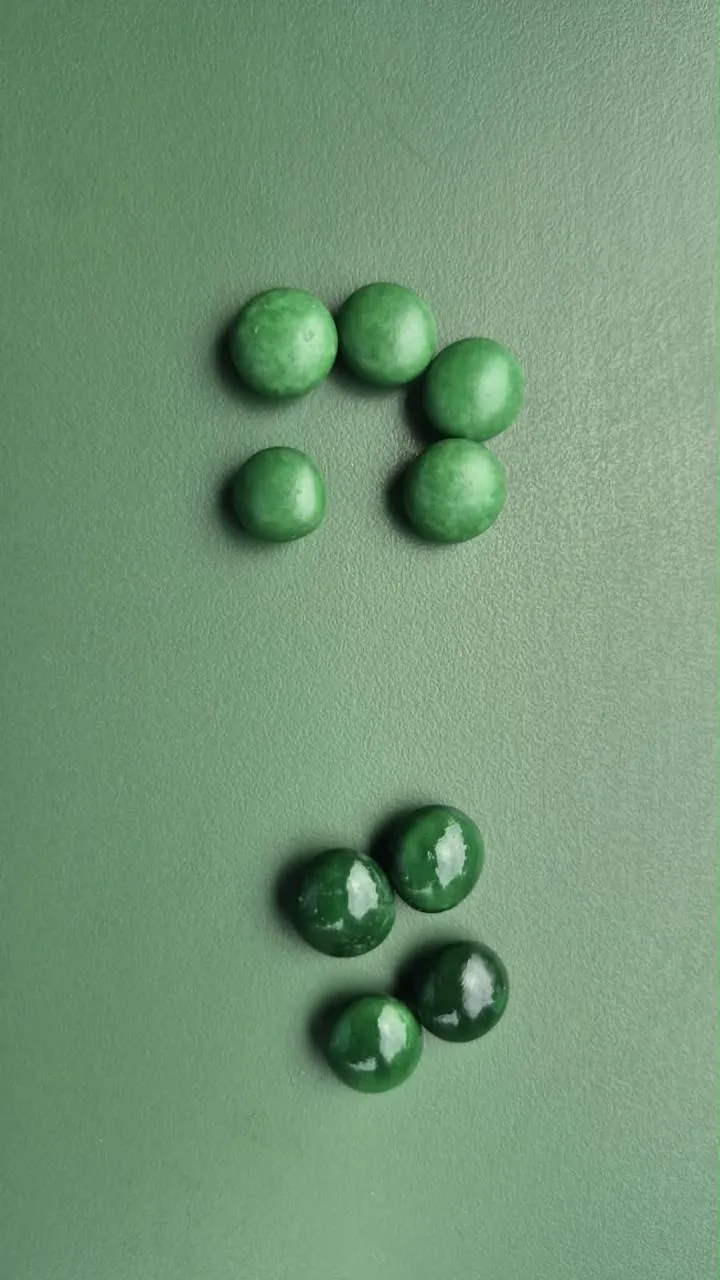
Wood-finishing flakes are not confectionery grades — and a colour name (lemon, blonde, orange) is not a specification.
The right grade: wax-free bleached shellac
Food manufacturers almost always specify dewaxed bleached shellac, wax ≤ 0.2%. It dissolves cleanly, gives a clear haze-free film, and — in the EU — it is now the only form that qualifies as a food additive. Orange, blonde and garnet flakes, standard bleached shellac and seedlac are technical grades for wood finishing and coatings, not for food.
A typical purchase specification covers wax, acid value, loss on drying, rosin (absent), and heavy metals such as lead and arsenic — all on a batch certificate of analysis.
Typical E 904 purchase specification — confirm against the current text of Regulation (EU) No 231/2012 and your own quality agreement.
How confectioners apply it
Flakes or powder are dissolved in food-grade ethanol (or a permitted aqueous ammonia system) to a working solids level. Confectioner's glaze is often around one-third resin in solvent, adjusted by the panning team; the solvent flashes off and a thin film remains. Most glazing problems trace back to the raw material or its storage:
- Haze or soft tack — wax too high. Specify wax ≤ 0.2%.
- Blocked bags, dull pan — moisture in the flakes. Check loss on drying on the COA.
- Alcohol odour, slow drying — cut too heavy for the pan.
- Resin that will not dissolve cleanly — heat-aged stock that has polymerised. Store cool and use first-in first-out; see why shellac blocks in storage.
Incoming QA should match the lot number on the bag, invoice and COA before the first trial batch.
European Union: E 904
Shellac is authorised as E 904 under Regulation (EC) No 1333/2008, with purity criteria in Regulation (EU) No 231/2012. Regulation (EU) 2026/189 changed two things: the specification now covers wax-free bleached shellac only (wax ≤ 0.2%), and E 904 is newly allowed in tablet-form foods for special medical purposes at up to 46,000 mg/kg. Uses include chocolate and confectionery glazing, chewing gum, decorations, small chocolate-coated bakery items, nuts, coffee beans and the surface of certain fresh fruit. Labels show "E 904" or "shellac". More in our E904 buyer's guide.
United States: confectioner's glaze
On US labels shellac usually appears as confectioner's glaze, resinous glaze or shellac. Purified shellac is listed in FDA's Substances Added to Food inventory and in 21 CFR 73.1 as a diluent for inks used to mark confectionery and supplement tablets. Food-grade shipments to the US also need an FDA-registered manufacturing facility, the importer's Foreign Supplier Verification Program, and Prior Notice. See our USA market guide.
Other markets: INS 904
Outside the EU and US, shellac is usually referenced as INS 904 in the Codex system, which many Asian and Middle Eastern import files use as the starting point. National rules still apply — check them with the importer. Market-specific guides: Germany, France, Spain, USA, Bangladesh.
Purchase order specification
Documents food buyers ask for
- Batch certificate of analysis against the applicable specification (EU 231/2012, or the buyer's food-grade specification)
- Product specification and a food-additive compliance declaration
- Safety data sheet and certificate of origin with lot traceability
- Process declaration — whether colour was removed physically or by chemical bleaching
- Allergen and GMO statements; Kosher or Halal certificates where the brand requires them
Read COA, MSDS and TDS explained for what each document should show.
Labelling points
Shellac is insect-derived, so it is not vegan — vegan brands usually switch to carnauba wax or zein. Coated fruit must be labelled honestly as coated. Organic programmes generally do not accept shellac as a routine coating — check with the certifier.
Why India is the source
Commercial lac is grown and refined mainly in eastern India, around the Jharkhand lac belt. What a panning line needs from that supply chain is dewaxed bleached capacity, crop traceability and clean export documentation — food-grade material handled as its own item, separate from furniture-grade flakes from the same region.
How we supply food manufacturers
We supply dewaxed shellac with wax below 0.2% and a batch COA from a NABL-accredited laboratory. For fillings, sauces and dairy we also supply food-grade guar gum (E412) as a thickener. Tell us your market (EU, US or other), application, whether you cut in-house, and the document pack your QA team needs — and ask for a 200–500 g pan sample — when you request a quote, and we will confirm what can be supplied and documented before we price it.
Quick answers
Is all shellac food grade? No. Only wax-free bleached shellac meeting the food specification is used in food. In the EU, since Regulation (EU) 2026/189, it is the only form that qualifies as E 904.
What is confectioner's glaze? The US label name for food-grade shellac, usually applied as an alcohol solution to give sweets their shine.
Is shellac vegan? No. Shellac comes from the lac insect. Vegan products usually use carnauba wax or zein instead.
This guide summarises publicly available regulations and industry practice as of September 2026. Verify the current rules for your market and your own quality agreement before ordering. It is not legal advice.
Sourcing Food-Grade Shellac?
Tell us your market, application and documents needed. Batch COA with every lot, quotes within 24 hours.